 MemeGIF
Transparent Background in MemeGIF for PNGs that reveal the layout beneath
Prepare a subject that can sit over a slide, poster, or colored card without an opaque rectangle. Transparent Background on MemeGIF creates a foreground cutout or preserves existing alpha, then exports PNG. Check the actual transparency and outline before placing the saved picture into another design.
Transparent Background workspace
Drop or paste a JPG, PNG or WebP · up to 30 MB
Up to 8192 pixels per side and 32 megapixels
Free · Sign in to process · Inputs and results are saved to your account. The first cutout downloads a local model. Processing speed depends on your device.
Introduction
What Transparent Background means in the saved file
Transparent Background lets the design beneath show through around your subject. MemeGIF keeps this file-level choice distinct from the white, dark, or checkerboard surface a viewer may display behind a picture.
Transparent Background for a composition on another surface
A product cutout can sit over a colored card without covering that card with the original photo rectangle. Use Transparent Background in MemeGIF when the next design should supply the surroundings. Inspect the subject against a surface similar to the planned layout, because a pale fringe that is subtle on white may stand out on blue.
A slide illustration may need room for a heading behind or beside its subject. Transparent Background preserves the selected foreground while making surrounding areas available for that layout. In MemeGIF, keep the original source and compare the cutout in context, including nearby text and other artwork.
- Use Transparent Background when the next layout should show through.
- Test MemeGIF output over the surface where it will appear.
A PNG extension alone does not establish transparency
PNG supports alpha, but it can also contain an entirely opaque image. Transparent Background in MemeGIF is about the pixels outside the foreground, not renaming a JPG or choosing a different extension. A photograph with white surroundings still needs extraction if those surroundings should reveal the design beneath rather than remain white.
Some image viewers place transparent pixels over a white surface and make a cutout look like an ordinary photograph. Do not judge a Transparent Background file only by that appearance. Place the MemeGIF PNG over a contrasting surface and check whether the area around the subject reveals the new color instead of carrying an opaque box.
- Transparent Background alpha differs from a baked-in white rectangle.
- Check MemeGIF PNG contents rather than the file extension alone.

How to use
How to use Transparent Background in MemeGIF
- Beforebag.jpg
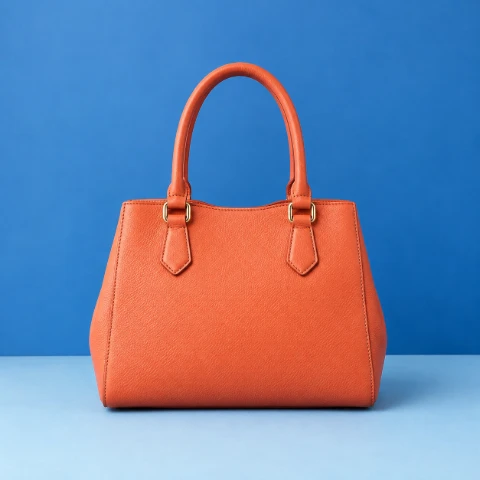 1254 × 1254 px1.63 MBSTEP 1
Choose the correct source path
Open Transparent Background in MemeGIF with a supported picture. Preserve source alpha only when its visible and transparent regions already form the desired cutout.
- BackgroundTransparentSTEP 2
Prepare an alpha result
Select transparent output, sign in, and process Transparent Background in MemeGIF. Allow resources to load for extraction, or skip inference with existing transparency.
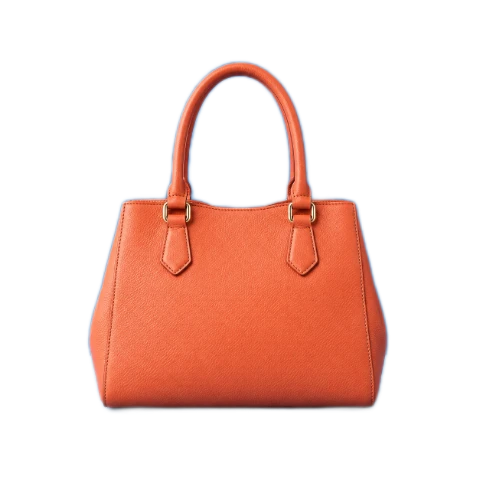 PNG · TransparentSTEP 3
Inspect the saved cutout
Compare Transparent Background output with its source in MemeGIF. Use zoom and contrasting inspection surfaces to check outlines, internal gaps, and retained fragments.
- AfterBeforebag.pngDownload
Checkerboard shows transparency and is not included in downloads.
STEP 4Download and test in context
Let Transparent Background saving finish in MemeGIF, then download the PNG. Place it over the intended layout and check that its surrounding areas show through.
Features
Choose how Transparent Background obtains its alpha
Transparent Background provides a new-extraction route and a source-alpha route. Choose the appropriate path in MemeGIF so an existing cutout does not need an unnecessary model estimate over an outline you already trust.
Extract a foreground from an ordinary picture
For an opaque source, Transparent Background uses U2NetP through a browser WASM runtime to estimate foreground and background. MemeGIF loads model and runtime resources from its own origin when needed. Allow those resources to load and follow the processing state while the local mask is created, especially during the first session.
The Transparent Background mask is an estimate applied at the source dimensions. MemeGIF can retain the canvas size without recovering every thin strand or identifying every internal gap correctly. Inspect the visible subject and surrounding regions after processing; a large PNG download does not by itself prove that the separation matches the complete photograph.
- Transparent Background inference creates an estimated foreground mask.
- Allow MemeGIF resources to load before evaluating the processing session.
Keep transparency that is already prepared
Enable the existing-transparency option in MemeGIF when a PNG or WebP already has suitable alpha. Transparent Background then skips inference and keeps that prepared outline for composition and PNG export. Use this route when the visible regions and empty areas are already correct, rather than asking another extraction pass to reinterpret them.
An opaque image has no useful cutout to preserve in that bypass route. Transparent Background does not invent transparency merely because the checkbox is selected. Look at the source in MemeGIF first: a logo inside a white rectangle and a logo with transparent surroundings can look similar in one viewer while requiring different processing choices.
- Transparent Background can preserve a prepared PNG or WebP alpha channel.
- Choose MemeGIF extraction when opaque surroundings still need removal.

Inspect Transparent Background output before exporting
Transparent Background offers comparison and zoom to review the cutout. MemeGIF separates a preview-only inspection surface from the output fill setting, so you can examine the outline without confusing display color with saved pixels.
Transparent Background comparison checks more than the silhouette
Compare before and after in MemeGIF to see whether Transparent Background retained the intended foreground. Check spaces between fingers, narrow product handles, straps, and holes within a shape as well as its outer border. A cutout may have a convincing silhouette while still covering an internal region that should reveal the next layout.
Zoom into Transparent Background edges that matter, then judge the image at its intended display size. A small slide illustration and a large product presentation can expose different flaws in the same mask. Use the MemeGIF preview as an inspection aid; magnifying it does not recreate missing source information or repair an uncertain boundary.
- Compare Transparent Background retained regions with the original source.
- Use MemeGIF zoom to inspect detail, then review at destination size.
Select transparent output for a reusable PNG
Choose the transparent output setting in MemeGIF before processing and saving a Transparent Background result intended for compositing. Selecting a solid white, black, gray, or custom fill instead places that background into the exported PNG. A file may have the right extension while containing a backdrop that the next design cannot show through.
Transparent Background retains the original canvas width and height, including transparent outer space when present. MemeGIF does not automatically trim the canvas to the subject or move it into a new position. Use a separate crop if the next layout needs a tighter frame, while keeping enough room for the intended composition.
- Transparent Background output settings determine alpha or embedded fill.
- Retain a source outside MemeGIF when another frame may be needed.
Understand Transparent Background materials and processing limits
Transparent Background supports reusable alpha within defined technical boundaries. In MemeGIF, inspect difficult edges, keep account uploads clear, and judge the completed file against its intended use.
Transparent Background does not rebuild difficult surfaces
Hair, fur, glass, translucent fabric, and low-contrast edges can produce imperfect Transparent Background results. Test the MemeGIF PNG on both light and dark surfaces to reveal leftover fragments or pale fringes. Reflected color can remain inside the foreground even when surrounding pixels are transparent, especially with a strongly colored original setting.
Transparent Background does not generate missing strands, relight the foreground, or provide a manual mask brush for repairing every edge. A different inspection surface may reveal a problem but does not solve it. Compare the MemeGIF result with the original and choose a clearer source or another editing step when the mask is unsuitable.
- Review Transparent Background glass and thin structures particularly carefully.
- MemeGIF surface changes reveal edges without improving segmentation.
Check inputs, uploads, and resource availability
Transparent Background accepts one static JPG, PNG, or WebP up to 30 MB, with a longest side of 8192 pixels and at most 32 megapixels. MemeGIF checks the complete input, not just the desired subject. Animation, SVG, PDF, HEIC, TIFF, and other unsupported formats need a compatible static source prepared separately.
Sign in to process Transparent Background. MemeGIF saves the input and result to your private account storage while computation runs in the browser. No subscription or generation credits are required. Resources may need reloading if caches disappear, and account saving needs a connection; local computation is not a permanently available offline workflow.
- Transparent Background exports PNG without batch or ZIP processing.
- MemeGIF browser computation still includes private account uploads.
Workflow examples
Illustrative ways to plan, generate, and review your work.
MemeGIF workflow examples
Begin with a product photograph and a focused image-editing brief. Compare the draft with the original for shape, labels, and proportions before placing it into a listing. Add approved logos and exact copy in your design application.
Choose a video model and describe one small action, such as a careful object turn. Review the available duration, resolution, and credits. Check the completed take for object continuity and sound before using it in a larger edit.
Give the image workspace a subject, viewpoint, and visual metaphor that supports your article. Preview the result inside the intended layout. Adjust the crop or composition when it competes with the headline or obscures an important detail.
Sign in and use Compress Image when a picture has the right dimensions but a large file size. Compression runs in the browser; input and output images are saved to your account. Compare the result before downloading individual files or a ZIP.
Paste a draft into Humanize AI and select Natural, Friendly, or Professional tone. Review the rewrite for meaning, names, figures, and technical terms. Copy or download the version you have checked; detector scores and publication outcomes are not guaranteed.
Record the palette, viewpoint, lighting, and subject scale in a reusable brief. Supply relevant references where the selected image model supports them. Compare the images together, then revise specific differences instead of assuming automatic campaign-wide consistency.
Transparent Background is free after sign-in, without a subscription or generation credit deduction. MemeGIF saves the input and completed PNG to your private account storage; processing runs in your browser.
MemeGIF Pricing and Credit Plans
Cancel anytime
Trending face-swap templates cost 300 Credits per video, including full-length Bad Times and every available format. Other tools keep their own quotes. Existing MV tickets remain usable until their original expiry; new tickets are no longer sold.
Pay once annually; receive 1/12 of your annual Credits each month. The first allocation arrives after payment, then monthly. Tax included. Each allocation expires at the next subscription month or paid-year end.
Lite
50% off0.025 / credit
$14.9/month equivalent · Billed $179· Save $179.8
Annual total: 7,200 credits, issued monthly
Video Models


Image Models


- Includes MiniMax H3 and all premium models
- Up to 1 batch generation task
- Standard generation speed
- Standard generation success rate
- Standard customer support
- Commercial Use License
Standard
50% off0.017 / credit
$24.9/month equivalent · Billed $299· Save $299.8
Annual total: 18,000 credits, issued monthly
Video Models
Image Models
- Includes MiniMax H3 and all premium models
- Up to 4 batch generation tasks
- Priority processing speed
- High generation success rate
- Priority customer support
- Commercial Use License
Pro
50% off0.014 / credit
$49.9/month equivalent · Billed $599· Save $599.8
Annual total: 43,200 credits, issued monthly
Video Models
Image Models
- Includes MiniMax H3 and all premium models
- Up to 10 batch generation tasks
- Fastest generation speed
- High generation success rate
- Dedicated account manager
- Commercial Use License
Max
50% off0.012 / credit
$99.9/month equivalent · Billed $1,199· Save $1,199.8
Annual total: 96,000 credits, issued monthly
Video Models
Image Models
- Includes MiniMax H3 and all premium models
- Up to 10 batch generation tasks
- Fastest generation speed
- High generation success rate
- Dedicated account manager
- Commercial Use License
Pay safely and securely with























FAQ
Frequently asked questions
Is Transparent Background free after signing in?
Yes. MemeGIF requires sign-in for processing but does not require a subscription or deduct generation credits for this tool. Input and completed output are saved to your private account storage.
Does Transparent Background upload the image?
Yes. MemeGIF saves the original and result to your account while image computation runs in the browser. Local processing does not mean upload-free processing. Keep the page open until saving finishes.
Does Transparent Background make every PNG transparent?
No. Select transparent output in MemeGIF for alpha. A chosen solid fill becomes part of the PNG, and an opaque source needs extraction rather than a file-extension change to reveal another layout.
Can Transparent Background preserve an existing alpha channel?
Yes. The existing-transparency option in MemeGIF skips inference and keeps source alpha. Use it for a prepared PNG or WebP, not an opaque picture that still needs foreground separation.
Why does a Transparent Background image look white in another viewer?
A viewer may put alpha over a white surface. Test the MemeGIF PNG against a contrasting background and check whether the surrounding area reveals that surface. Appearance on white alone is not conclusive.
Does Transparent Background crop the canvas to the subject?
No. MemeGIF keeps source width and height, including transparent outer space. Use a separate crop when a layout needs a tighter canvas; transparency and framing are different decisions.
Can Transparent Background guarantee perfect glass and hair edges?
No. Fine strands, transparency, reflections, and weak separation can remain imperfect. Use comparison, zoom, and contrasting surfaces in MemeGIF before relying on the PNG for a prominent or detailed layout.
Does Transparent Background rerun inference when I change colors?
MemeGIF can reuse the current cutout while its processor cache remains available. A fill change composites that same outline; it does not repair it. Preview-only surface changes also do not alter the saved PNG.
CTA
Prepare a Transparent Background PNG in MemeGIF
Choose the right source path, inspect alpha and edges, and test the downloaded cutout over its intended layout. Transparent Background on MemeGIF keeps the source canvas and saves a reusable PNG.
Choose an Image