 MemeGIF
 text to image for scenes with a clear subject and purpose
Begin with a clear scene, not a pile of effects. The text to image workspace in MemeGIF opens with GPT Image 2 in text mode at 1:1 and 1K. Describe one moment, its object relationships, and its light. Judge the idea in your first text to image draft before revising it.
Image workspace
Sample Image
 22 / 30
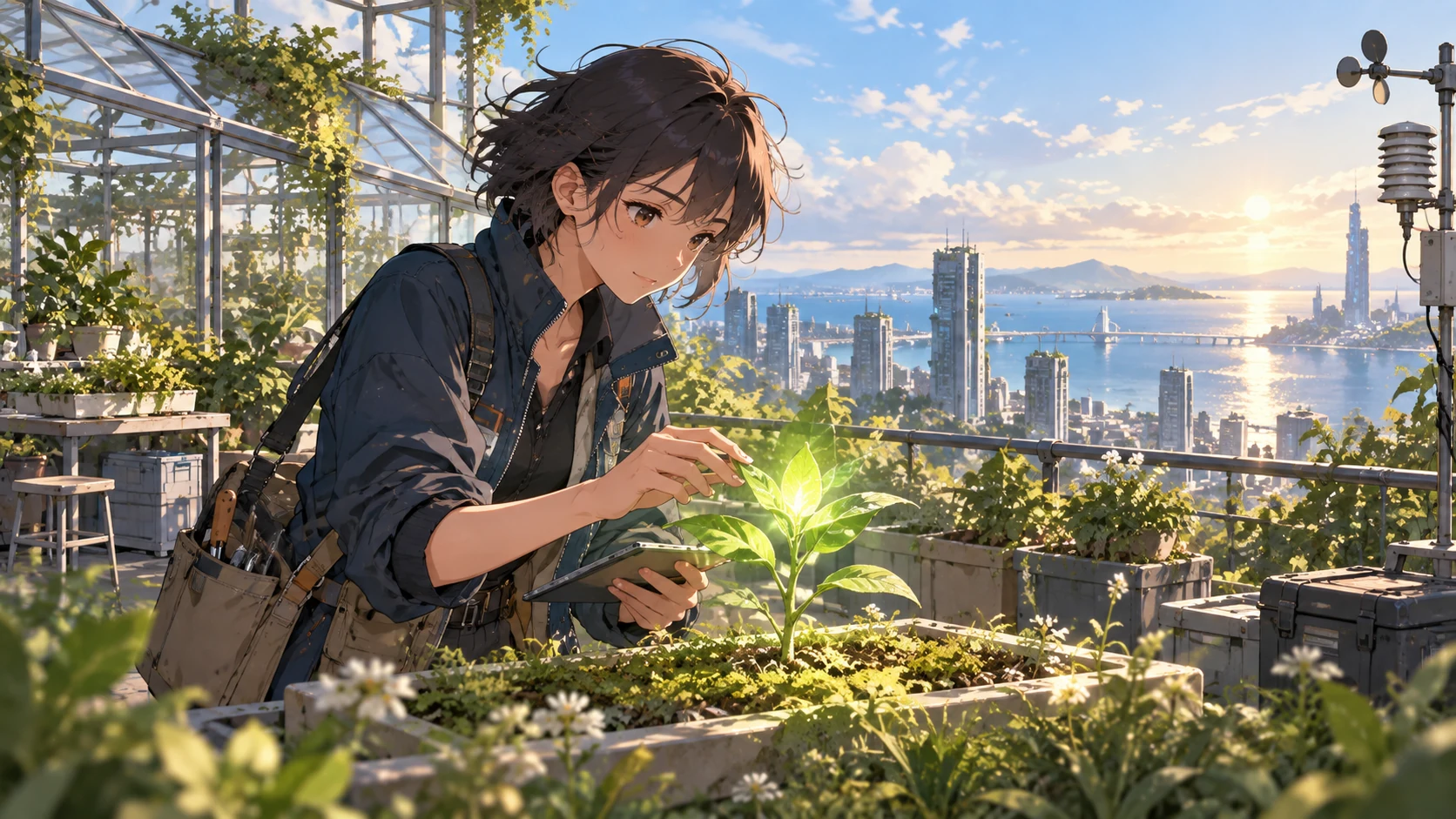
AI-generated illustration of a fictional rooftop botanist and coastal city.
Introduction
Give text to image a clear assignment in MemeGIF
Choose what the picture should communicate before adding style. A text to image brief in MemeGIF needs a visible subject and purpose.
Describe a moment rather than a category
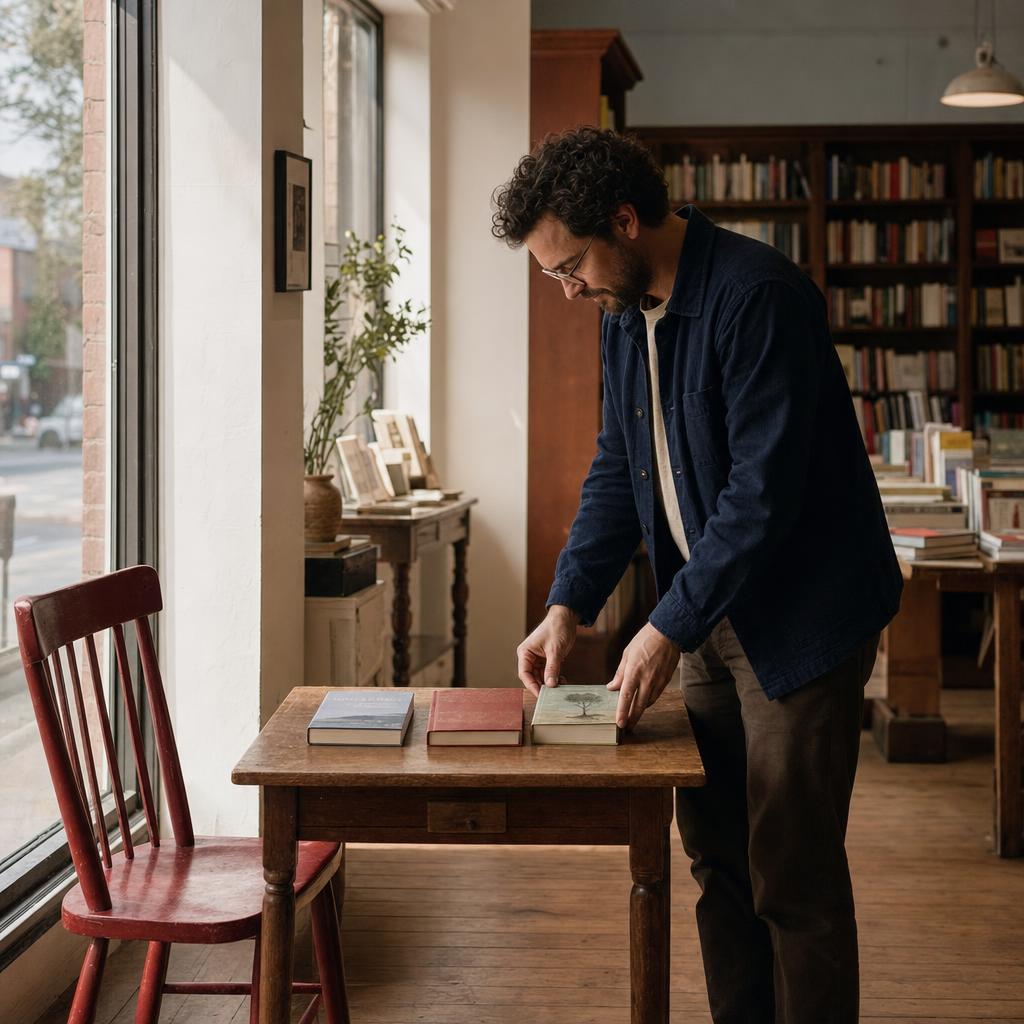
A bookshop names a place; an owner arranging books before opening describes a moment. Give text to image that action in MemeGIF. Supporting shelves establish the setting without dominating it. Decide what viewers should notice first.
- Bring one subject, action, and setting to MemeGIF.
- Keep the text to image brief centered on that moment.
Choose the intended viewing context
A square illustration and a wide presentation cover need different arrangements. Explain the destination in your MemeGIF text to image brief: a larger subject, open space for a heading, or a broader view of the room. Inspect the framing afterward.
Separate essentials from optional detail
Choose the defining features before submitting to MemeGIF. In a text to image scene, a yellow raincoat and empty station may matter more than distant window counts. Keep those priorities above decorative details when reviewing success.
How to use
How to create with text to image in MemeGIF
- PromptSTEP 1
Describe one moment
Sign in to MemeGIF and select GPT Image 2 text mode for text to image. Name the main subject, action, and setting without uploading a reference.
- ModelGPT Image 21K1:1PromptSTEP 2
Place the objects
Give text to image specific counts, positions, and lighting in MemeGIF. Keep the foreground, subject, and background relationships clear, with room for the intended layout.
- Detail
 STEP 3
Generate a draft
Begin text to image at 1:1 and 1K in MemeGIF. Choose one to four outputs, check the displayed credits, and submit your written scene for generation.
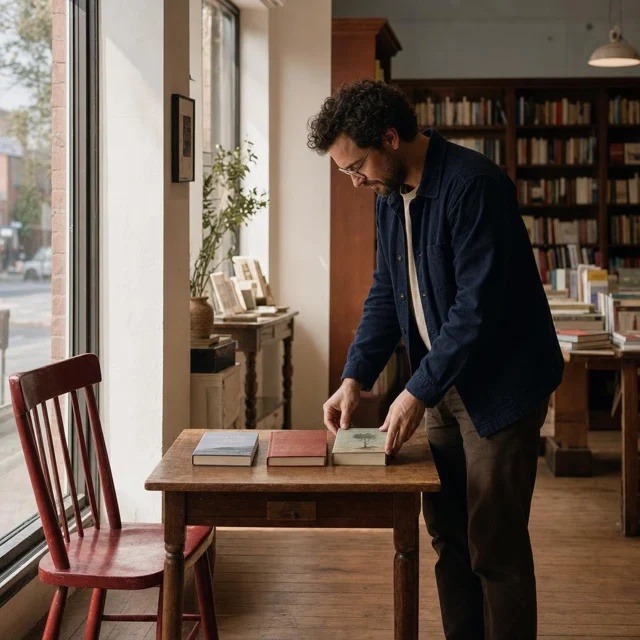
- Create a realistic square editorial photograph of an adult bookshop owner arranging exactly three books on a small wooden table near the front window. One red chair stands to the left of the table. The owner is on the right, looking down at the books. Soft morning light enters from the left, with gentle shadows extending right. Keep the distant shelves quiet and slightly softer than the subject. Show believable hand contact, readable object separation, and no signs, captions, or logos.DownloadSTEP 4
Revise one instruction
Compare the text to image result from MemeGIF with your brief. Inspect the action and object relationships, then change one instruction before requesting another draft.
Features
Make object relationships explicit in text to image
Give objects positions, not just names. MemeGIF text to image instructions should make their counts, spacing, and contact easy to inspect.
Count the objects that carry the scene
In the bookshop example, specify exactly three books on a small wooden table and one red chair to its left. Those text to image instructions make your MemeGIF review concrete. Extra chairs or merged books remain mismatches despite an attractive room.
- Keep your MemeGIF arrangement small enough to inspect object by object.
- Use a text to image revision to address the relationship that failed.
Replace ambiguous pronouns with clear nouns
Write "place the lamp behind the chair on the left" rather than "put it behind that." In MemeGIF, explicit nouns make a text to image request easier to interpret with several objects present. Repetition can clarify a relationship without repeating the whole scene.
Describe contact rather than mere proximity
A hand arranging books needs believable contact; a bicycle leaning against a wall needs support. Describe those relationships in a text to image request, then inspect the MemeGIF result closely. Nearby objects do not prove that hands, wheels, or table edges connect plausibly.
Plan a readable text to image frame in MemeGIF
Start with large shapes and a clear viewpoint. Give text to image enough space in MemeGIF for the subject to remain readable.
Choose the camera distance deliberately
A close view of hands, a waist-up portrait, and a wide room are different text to image assignments. Set the distance in your MemeGIF brief before fine detail. An expansive landscape may leave a face too small to convey its important expression.
- Decide whether expression or the surrounding environment matters most in MemeGIF.
- A wider text to image scene needs a readable silhouette.
Give the harbor scene distinct depths
Place a dark railing in front, the astronomer beside a compact telescope, and pale boats farther away. That text to image arrangement gives MemeGIF a foreground, subject plane, and distance. Keep the harbor quieter so its detail supports the figure rather than competing.
Reserve space for the later heading
The observatory example leaves calm sky at the upper right for typography added separately. Include that purpose in your text to image brief on MemeGIF. Inspect whether branches, bright clouds, or other invented details occupy the reserved area before placing the picture in your layout.
Connect light, surfaces, and style in text to image
Use one coherent visual direction for text to image. MemeGIF requests become easier to judge when materials and lighting support the same scene.
Name the light source and its effect
The bookshop prompt places morning light on the left and gentle shadows toward the right. That text to image instruction describes a visible condition you can check in MemeGIF. The harbor example instead has warm light from the right; keep each scene's directions consistent rather than combining both.
- Choose a main light direction before adding accents in MemeGIF.
- Check text to image shadows against the stated source.
Distinguish the important surfaces
A ceramic bowl, brushed metal spoon, and linen cloth should not all have the same shine. Name materials in your MemeGIF text to image brief, then compare their reflections and textures. Uniform gloss can look polished while misrepresenting the surfaces the scene was meant to communicate.
Choose a treatment that suits the subject
Use realistic editorial photography for the bookshop or expressive linework with restrained painted texture for the observatory. Give text to image a coherent treatment in MemeGIF instead of demanding flat shapes, heavy brushwork, and photographic detail everywhere. These directions do not promise editable vector output.
Refine text to image deliberately in MemeGIF
Sign in with enough credits for text to image. MemeGIF sends requests for provider processing and saves results to your account; this is not offline generation.
Assemble a brief you can review
Combine subject, action, placement, framing, and light into a compact paragraph. The GPT Image 2 text to image prompt in MemeGIF accepts 3-20000 characters; the maximum is not a writing target. Start at square 1K with one output, checking for conflicting object counts or camera directions.
Review the actual configuration
GPT Image 2 offers Auto or fifteen fixed ratios, 1K, 2K, or 4K, and one to four outputs. Review your text to image settings and displayed credits in MemeGIF. Requests specify JPEG and high quality without a separate quality-level control. Other selectable models have their own options.
Change one instruction before the next request
If the astronomer is too small, adjust framing before changing clothing, weather, and palette. Keep the text to image prompt and settings in your own notes when using MemeGIF. Knowing what you changed makes comparison useful, although separate requests may still vary in details you did not revise.
Judge text to image against the scene you requested
Use the brief as a checklist for text to image. An appealing MemeGIF result can still omit the action or reverse a key relationship.
Check the large decisions first
Review subject, pose, counts, and positions before admiring texture. Does the owner actually arrange the books, and does the chair stay left of the table? A text to image result from MemeGIF should answer those questions. Fine rendering cannot rescue a scene that misses its main action.
Inspect small errors that change the meaning
Look at fingers, contact points, repeated objects, stray lettering, and reflections. A convincing text to image thumbnail may conceal an impossible hand or an extra telescope. Compare the downloaded MemeGIF draft at a useful viewing size, then simplify the brief or revise the specific mismatch before using it.
Switch workflows when a real source matters
Text mode does not accept pictures. For your particular product, room, or person, switch from text to image to reference editing in MemeGIF. GPT Image 2 image mode needs at least one reference and accepts up to sixteen. Even then, a generated hidden side is not verified evidence.
Example prompts
A quiet bookshop before opening
Create a realistic square editorial photograph of an adult bookshop owner arranging exactly three books on a small wooden table near the front window. One red chair stands to the left of the table. The owner is on the right, looking down at the books. Soft morning light enters from the left, with gentle shadows extending right. Keep the distant shelves quiet and slightly softer than the subject. Show believable hand contact, readable object separation, and no signs, captions, or logos.
An observatory above the harbor
Create an original square illustration of an adult astronomer on an observatory balcony overlooking a quiet harbor at dawn. Place the figure on the left beside one compact telescope, facing the pale boats in the distance. Use a dark foreground railing, a clear midground silhouette, and softer cool shapes beyond. Warm light touches the coat and telescope from the right. Clean expressive linework and restrained painted texture. Leave a calm area of sky at the upper right for typography added separately. No text or brand marks.
Workflow examples
Illustrative ways to plan, generate, and review your work.
MemeGIF workflow examples
Begin with a product photograph and a focused image-editing brief. Compare the draft with the original for shape, labels, and proportions before placing it into a listing. Add approved logos and exact copy in your design application.
Choose a video model and describe one small action, such as a careful object turn. Review the available duration, resolution, and credits. Check the completed take for object continuity and sound before using it in a larger edit.
Give the image workspace a subject, viewpoint, and visual metaphor that supports your article. Preview the result inside the intended layout. Adjust the crop or composition when it competes with the headline or obscures an important detail.
Sign in and use Compress Image when a picture has the right dimensions but a large file size. Compression runs in the browser; input and output images are saved to your account. Compare the result before downloading individual files or a ZIP.
Paste a draft into Humanize AI and select Natural, Friendly, or Professional tone. Review the rewrite for meaning, names, figures, and technical terms. Copy or download the version you have checked; detector scores and publication outcomes are not guaranteed.
Record the palette, viewpoint, lighting, and subject scale in a reusable brief. Supply relevant references where the selected image model supports them. Compare the images together, then revise specific differences instead of assuming automatic campaign-wide consistency.
MemeGIF Pricing and Credit Plans
Cancel anytime
Trending face-swap templates cost 300 Credits per video, including full-length Bad Times and every available format. Other tools keep their own quotes. Existing MV tickets remain usable until their original expiry; new tickets are no longer sold.
Pay once annually; receive 1/12 of your annual Credits each month. The first allocation arrives after payment, then monthly. Tax included. Each allocation expires at the next subscription month or paid-year end.
Lite
50% off0.025 / credit
$14.9/month equivalent · Billed $179· Save $179.8
Annual total: 7,200 credits, issued monthly
Video Models


Image Models


- Includes MiniMax H3 and all premium models
- Up to 1 batch generation task
- Standard generation speed
- Standard generation success rate
- Standard customer support
- Commercial Use License
Standard
50% off0.017 / credit
$24.9/month equivalent · Billed $299· Save $299.8
Annual total: 18,000 credits, issued monthly
Video Models
Image Models
- Includes MiniMax H3 and all premium models
- Up to 4 batch generation tasks
- Priority processing speed
- High generation success rate
- Priority customer support
- Commercial Use License
Pro
50% off0.014 / credit
$49.9/month equivalent · Billed $599· Save $599.8
Annual total: 43,200 credits, issued monthly
Video Models
Image Models
- Includes MiniMax H3 and all premium models
- Up to 10 batch generation tasks
- Fastest generation speed
- High generation success rate
- Dedicated account manager
- Commercial Use License
Max
50% off0.012 / credit
$99.9/month equivalent · Billed $1,199· Save $1,199.8
Annual total: 96,000 credits, issued monthly
Video Models
Image Models
- Includes MiniMax H3 and all premium models
- Up to 10 batch generation tasks
- Fastest generation speed
- High generation success rate
- Dedicated account manager
- Commercial Use License
Pay safely and securely with























FAQ
Frequently asked questions
Do I need a reference photo for text to image?
No. GPT Image 2 text mode in MemeGIF takes words and does not accept image uploads. Use text to image for a new scene; switch to image mode with one to sixteen references when existing material should guide the result. Sign-in, network access, and credits are required.
How detailed should a text to image prompt be?
Include the subject, action, placement, framing, and light. The default model's text to image input in MemeGIF allows 3-20000 characters, but a focused paragraph is often easier to review. Add a missing instruction after inspecting the draft rather than filling the prompt with conflicting adjectives.
Why does text to image add extra objects?
Check whether your MemeGIF brief asks for a collection or busy environment without clear quantities. Give text to image the important counts and a simple arrangement. Those instructions help you direct and assess the draft; they do not guarantee that every requested object or quantity is reproduced correctly.
Can I change the shape of a text to image result?
Yes. The GPT Image 2 text to image workspace in MemeGIF starts at 1:1 and offers fifteen fixed ratios plus Auto. Auto leaves the choice to the model, not a guaranteed composition or dimension. Adjust the scene for its selected frame and review resolution, outputs, and credits.
Will repeating a text to image prompt give the same picture?
Do not assume identical results from repeated text to image requests. Save your MemeGIF prompt, settings, and selected draft in your project records. When a result establishes the direction, reference editing may be more useful than describing it again; further edits still need comparison and review.
CTA
Start text to image with a clear scene in MemeGIF
Bring a bookshop moment, a harbor viewpoint, or your own visual assignment to MemeGIF. Describe the relationships that matter, check the text to image settings and credits, then review the first draft before taking the next creative step.
Describe your scene