 MemeGIF
 Opus 5.5 Guide: Crayon Picture-Book Motion
Study a crayon picture-book film with MemeGIF. Review its story, source code, narration, and visual rhythm before planning a separate motion project.
Start here: open MemeGIF Opus for animated bedtime books.
Watch The Moon Can’t Sleep, the original crayon film. The supplied release lasts 52.010 seconds: a girl climbs to the rooftop to comfort a sleepless moon with a lullaby, before the story returns to a book on a table. LemoLab’s production statement attributes its films to Claude Opus 5.5 writing code. We have not verified those sessions or run this reproduction; commands need a separate local terminal.
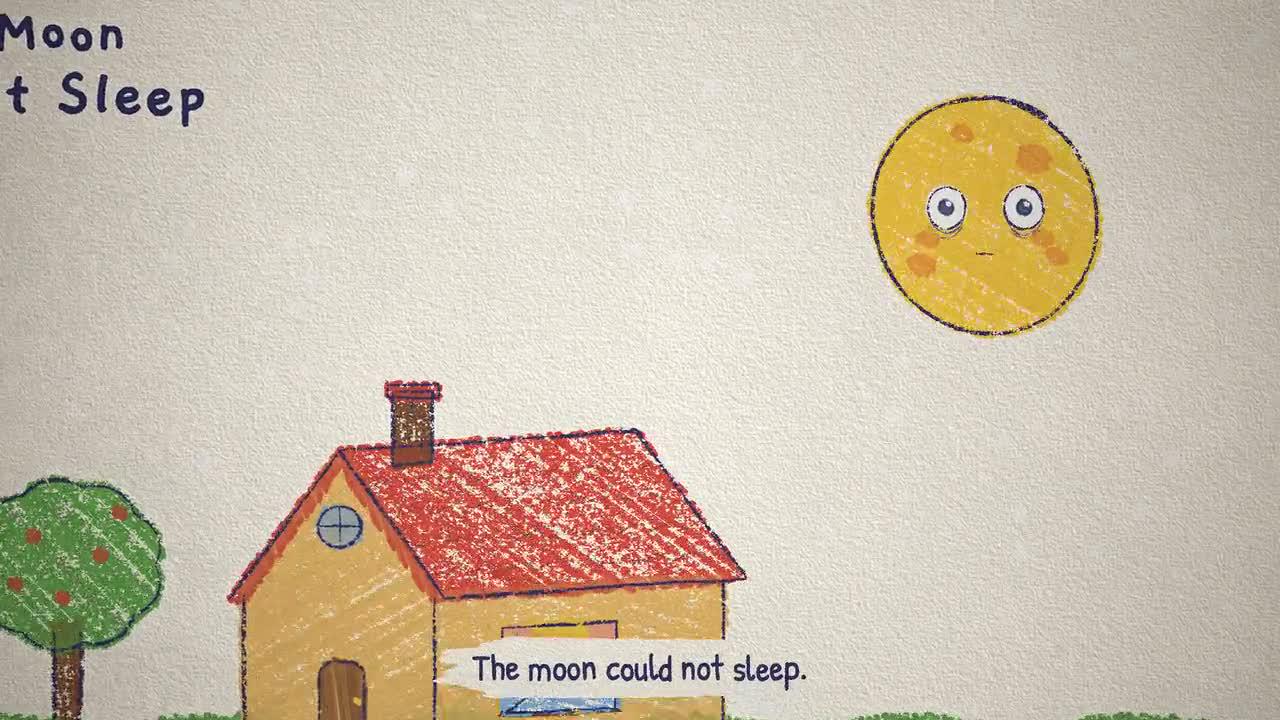
Author-film frame. Credit: LemoLab, not MemeGIF.
1. Understand the material and story
Read the crayon-and-wax style specification. Pressure-dependent strokes, hatching, and watercolor resist create the look. Drawing advances the story: the ladder appears, the wash reveals white-crayon stars, and the page becomes a physical book. Drawings step at 12 fps while camera and wash movement run at 24 fps; intentional repeated poses are not automatically dropped frames.
Preserve the author MP4. Inspect chars.js, world.js, film.js, gl.js, and end.js in styles/crayon-book/demo/. Compare proportions, climbing contact, sleep poses, and the book reveal. Attribute the reconstruction rather than claiming its story.
Use the film as a study of storytelling before treating it as an MemeGIF brief. Write down the problem, the comforting action, and the emotional change in your own words. Then distinguish that sequence from the source's particular girl and moon. An MemeGIF project can learn from the structure while receiving an original story rather than copying the published case.
For MemeGIF planning, ask what a drawing accomplishes at each moment. Does it introduce a character, make a path usable, reveal a hidden feature, or resolve the problem? Mark decoration separately from story action. In an MemeGIF brief, a visible purpose gives each reveal something to communicate and helps you remove motion that distracts from the central relationship.
Inspect the reference's character silhouette before proposing an MemeGIF adaptation. Hair, face, clothing, and posture should remain recognizable when the camera moves or the material becomes more complex. Use a written character note beside your MemeGIF treatment. A desirable texture is insufficient if viewers cannot identify the person taking the action or understand where that person is looking.
Compare a still frame with the moving passage when evaluating an MemeGIF idea. A scribbled line can look attractive in isolation while flickering too strongly during a quiet scene. Describe the amount of activity your MemeGIF story needs: lively drawing for an active moment, calmer detail when the viewer should listen or notice a change in the character.
2. Prepare a separate workspace
Conditional setup—not an execution report: prepare Git, Node 20+, FFmpeg/ffprobe, and Python 3.11–3.13 or uv. Keep the commit and lockfile; install the music tier for modeled instruments.
git clone https://github.com/lemomo-ai/lemo-opuscar.git moon-study
cd moon-study
export LEMO_OPUSCAR_HOME="$PWD"
sh plugin/skills/lemo-opuscar/scripts/setup.sh deps voice music
sh tools/fetch.sh instruments vsco2ce
sh tools/fetch.sh instruments vcsl
D=styles/crayon-book/demo
mkdir -p evidence
git rev-parse HEAD > evidence/commit.txt
Confirm fonts, samples, and voice model exist; resolve missing dependencies without substituting characters or soundtracks.
Keep the MemeGIF web project separate from this local source reconstruction. The setup commands prepare the author's repository for a coding environment; they are not commands to paste into the web generator. Record which workflow produced each file. An MemeGIF preview and a locally rendered author study need distinct names so collaborators can understand their origin without reconstructing your history.
Before asking a coding agent to change the source, create a short dependency checklist beside the MemeGIF planning notes. Locate the referenced fonts, sound inputs, and build entry, then record actual missing files. Avoid replacing an absent asset just to make the command finish. An MemeGIF creative brief can stay useful while the separate reconstruction remains honestly marked as incomplete.
Use a clean evidence directory for the local study and a separate folder for MemeGIF drafts. Retain the supplied release untouched, along with the source revision and dependency record. Save successive renders under distinct names. This makes it possible to explain whether an MemeGIF suggestion influenced a later edit or whether you are reviewing the author's unmodified design.
3. Paste this new reproduction prompt
This is a newly written brief, not the author’s original prompt.
Reproduce The Moon Can't Sleep as an attributed study of the supplied film.
First inspect the commit, lockfiles, crayon-book STYLE.md, DEMO.md, CREDITS,
core APIs, demo/build.sh, and actual assets. Report missing inputs before coding.
Preserve the girl, sleepless moon, rooftop lullaby, sleeping resolution, and
return to the tabletop book. Do not substitute characters or generated footage.
Explain the dependency and scene plan, then wait for approval. Check the source's
52-second, 24-fps picture against the release's approximately 52.010-second
container; do not add frames just to match container decimals. Preserve credits.
Keep page-anchored paper texture, wax resist, character visibility, intentional
two-frame drawing steps, and continuous camera movement. Derive state from
absolute render(t) and fixed seeds. Test arbitrary and reverse seeks.
Use the existing script, score, narration, and supported build commands.
Listen to regenerated speech and reconcile timing before final acceptance.
Check ladder contact, wash coverage, caption holds, and the full book ending.
Save real frame checks, model/provider/effort/session records, prompts, and diffs.
No publishing, invented original prompts, or claims that unrun checks passed.
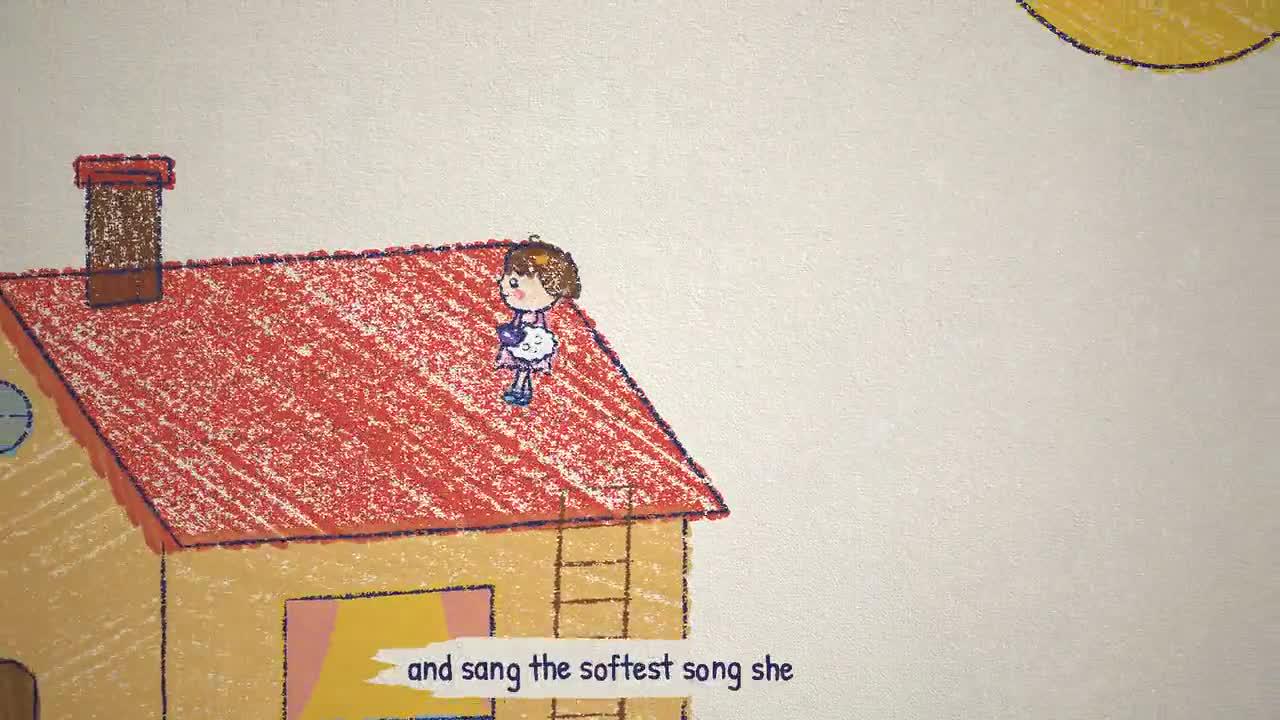
Original-film frame; inspect motion separately for contact and timing.
Separate an attributed reproduction request from an original MemeGIF request. The reproduction prompt below names the supplied film and preserves its case; an original project should define its own characters, conflict, setting, and ending. Do not describe the reference as an MemeGIF result. Keeping those purposes explicit gives the coding agent a clear basis for deciding what must remain unchanged.
For an original MemeGIF treatment, choose an action the viewer can follow visually before adding narration. Identify what is visible before the action, what changes during it, and how the ending confirms the change. Use plain descriptions in the MemeGIF brief. A comforting story benefits from an understandable relationship more than from a list of effects with no narrative connection.
Keep the desired paper-and-crayon appearance distinct from the local rendering implementation when planning MemeGIF. A creative description can specify visible texture, readable characters, and a gentle reveal without promising access to the author's shaders. MemeGIF's motion workspace is a separate system; the external repository supplies the code for the reconstruction described here, rather than an installed web-tool style.
Review an MemeGIF motion brief for achievable scope before submitting it. Keep the main character, supporting relationship, and key reveal clear; avoid asking one short project to reproduce the entire reference film. MemeGIF's supported duration and style controls should determine the web request. The longer author release and its narrated soundtrack remain reference material for the separate local study.
4. Build, inspect, and correct
After approval, the script rebuilds speech, events, score, mix, subtitles, and video: 24 fps, two workers, and the crayon-specific mux.
node core/render/still.mjs "$D" 0.5 --q 'test=model&page=girl' --out evidence/girl
sh "$D/build.sh"
node core/render/still.mjs "$D" 0.5 10 22 32 43 51.5 --out evidence/review
OUT=styles/crayon-book/crayon-book.mp4
ffprobe -v error -count_frames -show_streams -show_format -of json "$OUT"
ffmpeg -v error -i "$OUT" -f null -
If the girl disappears beneath the wash, inspect compositing order. If texture swims, check its page-space anchor. For an observed defect, request:
Correct only the documented contact, wash, or ending problem. Preserve source
characters and timing. Repair anchors or layer order rather than hiding errors
with cuts. Show the diff and new adjacent frames; replay the passage with sound.
Inspect contact in the source study as carefully as composition in an MemeGIF preview. Follow the hand, foot, ladder, and roof through the action instead of judging the pose from one frame. State the observed mismatch before proposing a repair. Apply the same habit to MemeGIF revisions: identify the affected passage and explain what movement should remain continuous around it.
For an MemeGIF visual review, distinguish intended material movement from accidental instability. Watch whether texture travels with the page or appears to slide independently as the camera moves. In the local reconstruction, inspect the source responsible for that anchor. In MemeGIF, describe the visible defect and desired continuity without claiming that the web interface exposes the author's compositing code.
Check the reveal for readability when developing an MemeGIF concept. The viewer should notice the change while still recognizing the character and understanding the setting. Compare the passage before, during, and after the reveal. In an MemeGIF revision note, preserve the useful action and identify the obscured detail instead of requesting an unrelated scene that avoids the original challenge.
Keep narration review with the separate local film and visual review with the MemeGIF draft. Listen for missing words, rushed delivery, and sound that obscures speech in the reconstructed export. Do not imply that MemeGIF generated that narrated soundtrack. A silent web motion project can still provide useful composition and timing ideas, but its deliverable needs to be described accurately.
5. Accept the complete film, not just its metadata
The documented 52-second picture implies 1,248 frames at 24 fps. Check video and audio durations separately; do not stretch them to force the release’s container decimal. Watch and listen through the final page and musical decay. Check glyphs, camera continuity, and narration.
Original frame from The Moon Can’t Sleep. Credit: LemoLab.
Keep source, lockfiles, input provenance, prompts, actual session records, edits, checks, and MP4. MIT covers Lemo’s code; the moon film’s asset credits separately identify OFL fonts, CC0 samples, voice components, and the original score. Preserve their notices.
Prepare an MemeGIF review note that distinguishes file checks from creative acceptance. Decoding a film successfully does not establish that the character is visible, the story resolves, or the reader can follow captions. Inspect the whole sequence at its intended viewing size. For MemeGIF, record the actual preview or export reviewed rather than attaching success claims copied from the author's documentation.
Treat the final book reveal as part of the reference story when planning an MemeGIF adaptation. It changes how the viewer understands the page they have been watching. An original MemeGIF ending can choose a different object or setting, but it should confirm the emotional resolution. Avoid ending immediately after the main action when that leaves the final relationship unexplained.
If you share an MemeGIF study alongside the original film, label them separately and retain the source credits. Explain which story and images belong to the author and which choices belong to your project. Keep any human edits visible in the record. This prevents an MemeGIF concept, an external reconstruction, and the published reference from being mistaken for interchangeable outputs.
Deliver an MemeGIF project with a concise explanation of its story, intended viewing context, and unresolved issues. Keep the full prompt and saved version with that explanation, while archiving local-study dependencies elsewhere. Another reviewer should be able to assess the MemeGIF result directly, identify the accepted creative decisions, and see what still needs revision without assuming that unperformed checks succeeded.